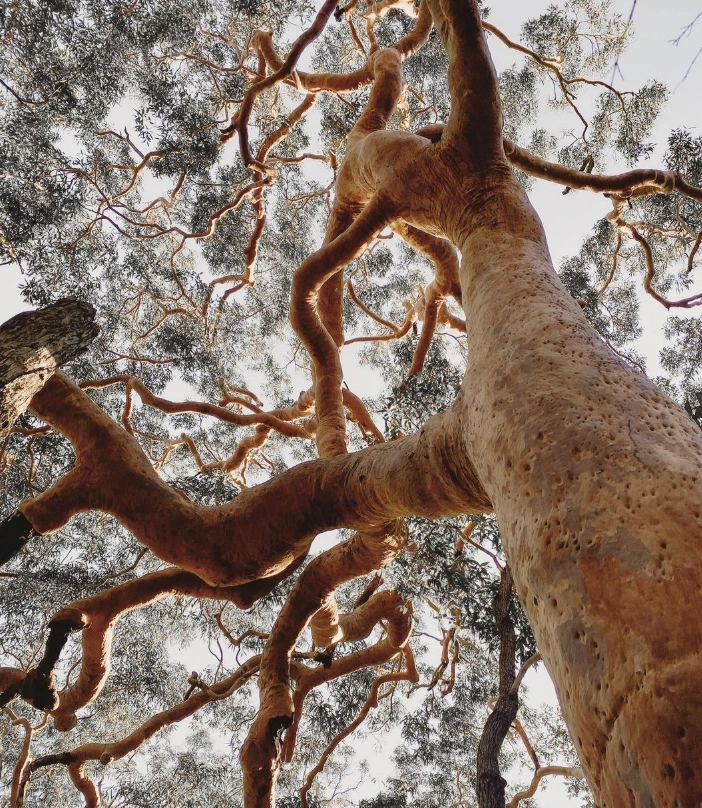
Consulting Arborist & Arborist Reports – Central Coast NSW
Professional Arboricultural Reports for Development, Planning & Tree Risk Assessment
Supporting homeowners, builders, architects, planners and developers across the Central Coast, Sydney, Newcastle and the Hunter.
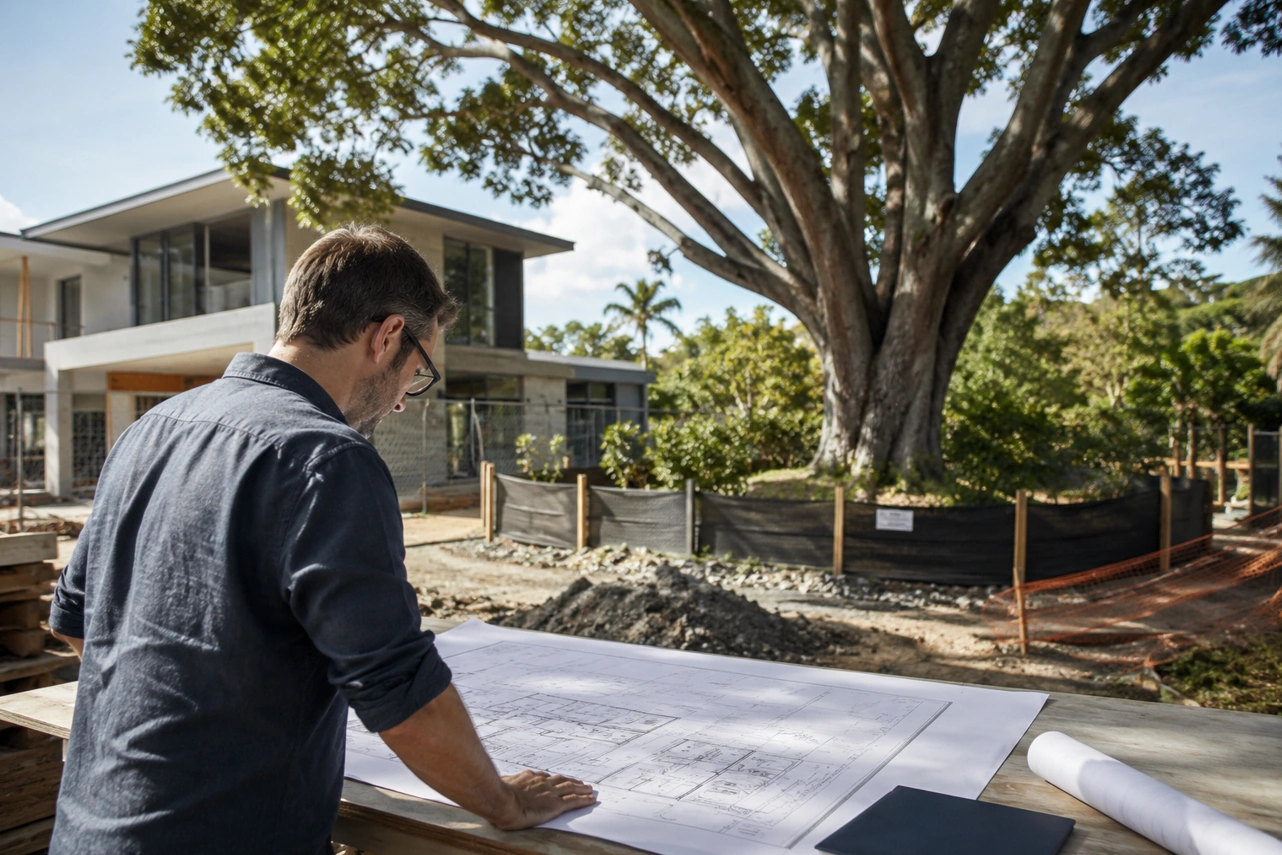
Why Choose Bark & Branch Consulting
Qualifications & Credentials
• AQF Level 5 Consulting Arborist
• Registered QTRA User
• VALID Tree Risk-Benefit Validator
• Reports Prepared to Australian Standards
• Professional Indemnity & Public Liability Insured
• Independent, Evidence-Based Arboricultural Advice
Professional Registrations
QTRA Registered User
View independent QTRA registration
VALID Tree Risk-Benefit Validator
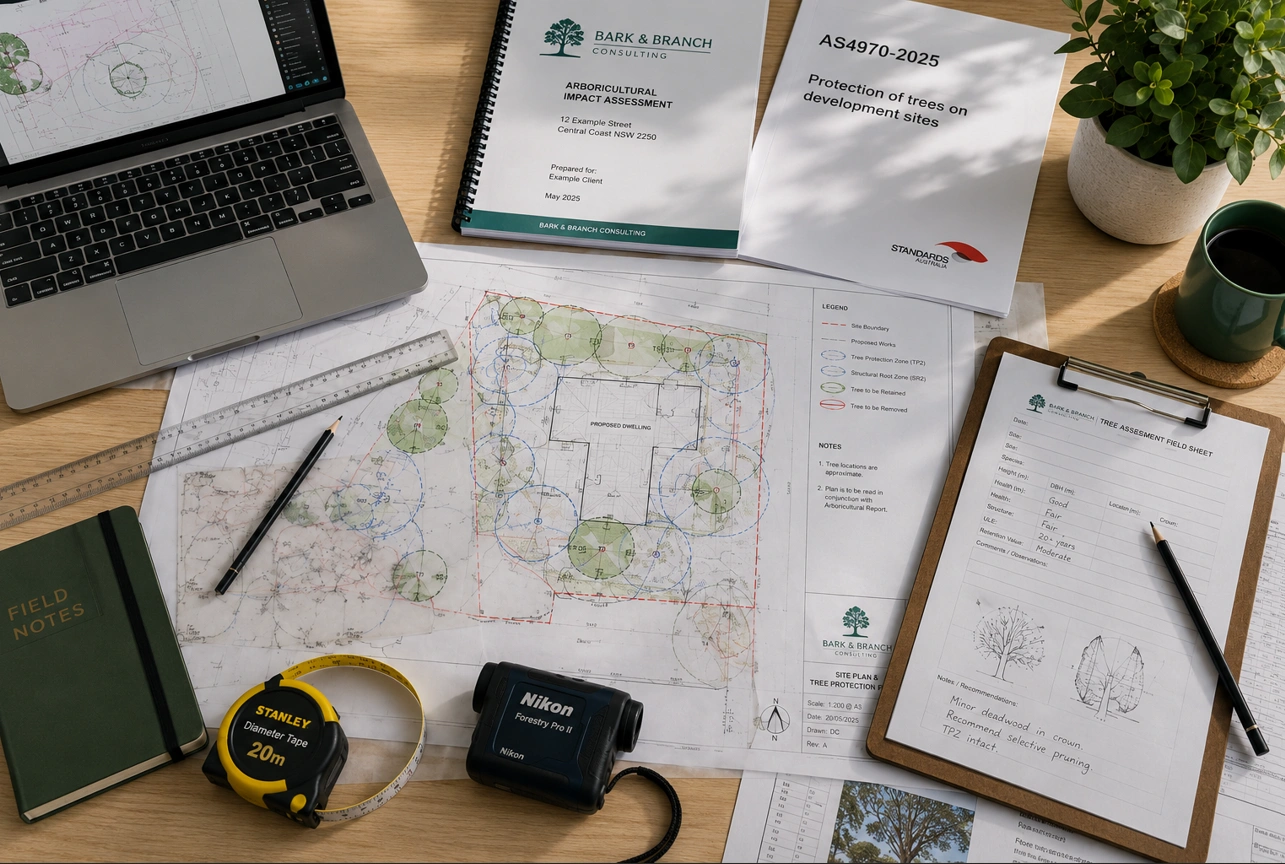
Arborist Reports
Arboricultural Impact Assessments
Required for Development Applications.
Preliminary Arboricultural Reports
Identify tree constraints before design begins.
Tree Risk Assessments
QTRA & VALID methodologies.
Tree Damage Assessments
Assessment of tree-related damage to structures and infrastructure.
Arboricultural Supervision
Construction phase monitoring.
Tree Protection Plans
Tree protection recommendations in accordance with AS 4970–2025
Professional Arboricultural Services
Independent advice to support planning, development and tree management
Whether you're planning a new development, responding to a council request or managing tree-related risks, Bark & Branch Consulting provides practical, evidence-based arboricultural advice tailored to your project. Our reports are prepared to a high professional standard and are designed to assist homeowners, builders, architects, planners and property professionals in making informed decisions.
Preliminary Arboricultural Reports (PAR)
Early-stage arboricultural advice to identify tree constraints before design is finalised. Engaging an arborist early can reduce redesign costs, improve project outcomes and streamline the planning process.
Arboricultural Impact Assessments (AIA)
Professional assessments evaluating the impact of proposed development on existing trees. Our AIAs help support Development Applications, identify practical tree protection measures and balance development objectives with long-term tree retention.
Tree Risk Assessments
Independent tree risk assessments using recognised methodologies including QTRA and VALID. Suitable for residential properties, schools, caravan parks, commercial developments and public open spaces where objective risk management is required.
Tree Damage Assessments
Independent investigations into alleged tree-related damage to buildings, retaining walls, driveways, footpaths and underground services. Our assessments provide evidence-based opinions suitable for property owners, engineers, insurers and councils.
Arboricultural Supervision
Professional on-site supervision during construction to help protect retained trees and ensure compliance with development consent conditions and AS 4970 – 2025 Protection of Trees on Development Sites. Services include excavation monitoring, root investigations, tree protection inspections and compliance reporting.
Pruning Specifications & Tree Management
Professional pruning specifications prepared in accordance with AS 4373 – 2007 Pruning of Amenity Trees, together with practical tree management advice to support safe, sustainable and long-term tree care. Suitable for councils, schools, strata managers, commercial properties and private landowners.
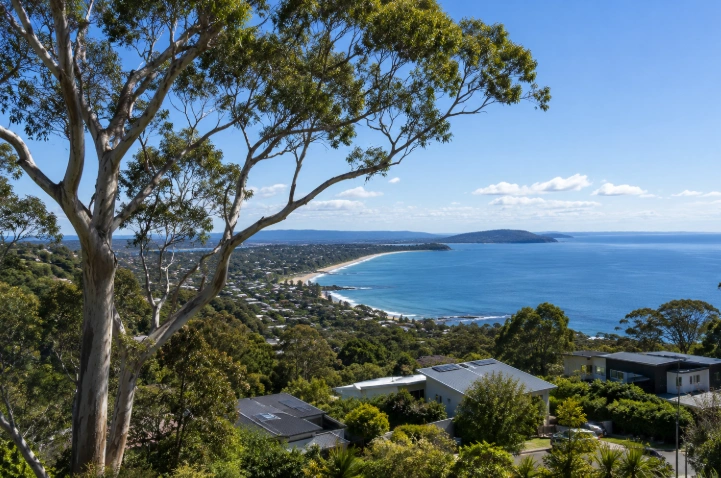
Consulting Arborist – Central Coast NSW
Bark & Branch Consulting provides professional arborist reports and independent AQF Level 5 arboricultural advice across the Central Coast of NSW, with services also available throughout Sydney, Newcastle and the Hunter.
Services are provided to homeowners, builders, architects, designers and other property professionals, with practical arboricultural advice for development, tree management and Council requirements.
Central Coast service areas include: Gosford • Erina • Terrigal • Wamberal • Kincumber • Avoca Beach • Woy Woy • Umina Beach • Tuggerah • Wyong • The Entrance and surrounding areas.
Contact Bark & Branch Consulting
Address
Central Coast, NSW, Australia
Phone
0405717823ABN
57723796268
Arboricultural Impact Assessments (AIA)
Professional arboricultural assessment for proposed development, helping identify tree constraints, assess development impacts and establish practical tree protection measures.
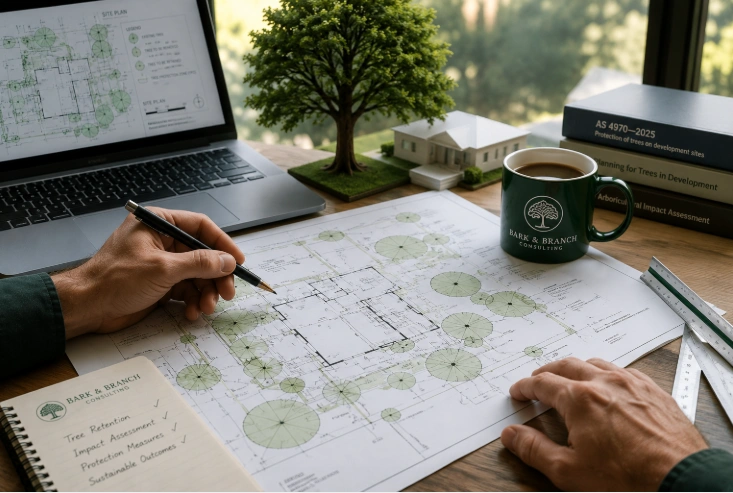
What is an Arboricultural Impact Assessment?
An Arboricultural Impact Assessment (AIA) is a detailed assessment of trees that may be affected by a proposed development.
The report identifies relevant tree constraints, assesses the potential impacts of the proposed works and provides recommendations for tree retention, removal and protection during construction.
An AIA may be requested by Council as part of a Development Application, particularly where proposed buildings, driveways, excavation, services or other works are located near existing trees.
Bark & Branch Consulting prepares clear, practical AIA reports designed to support the development process while appropriately considering the long-term retention and protection of trees.
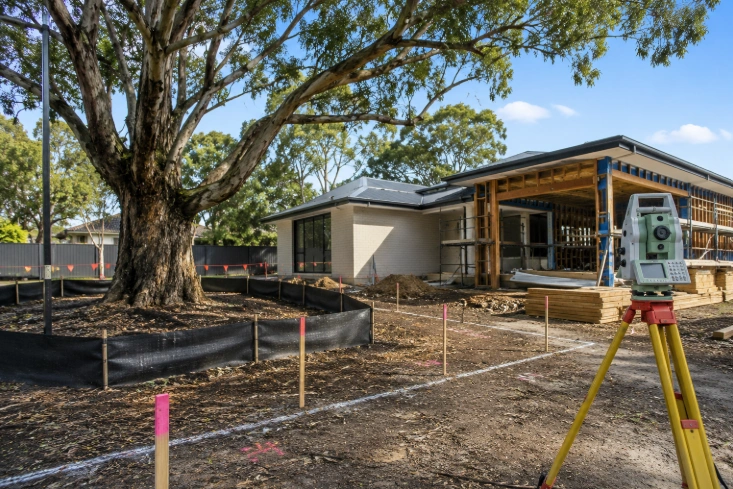
When Do You Need an AIA?
An Arboricultural Impact Assessment may be required when proposed development has the potential to affect trees on or adjoining a property.
Common situations include:
• New dwellings, extensions and secondary dwellings
• Driveways, garages and other structures near trees
• Excavation, retaining walls or changes to ground levels
• Installation of underground services
• Development near Council or neighbouring trees
• When Council requests an arboricultural report as part of a Development Application
• Where tree retention, removal or protection needs to be assessed during the design process
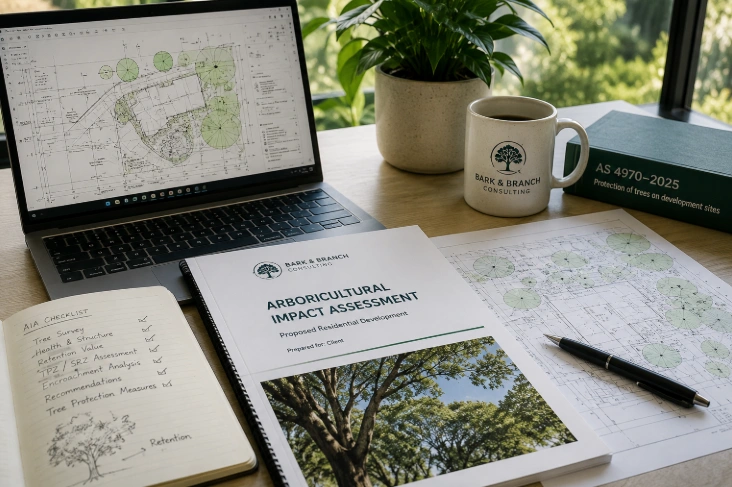
What Does an AIA Include?
A Bark & Branch Arboricultural Impact Assessment provides a clear assessment of how proposed development may affect existing trees and identifies appropriate measures for their management and protection.
A typical AIA may include:
• Tree identification and assessment of health, structure and retention value
• Assessment of tree protection requirements in accordance with AS 4970–2025
• Assessment of development encroachment within tree protection areas
• Consideration of proposed buildings, driveways, excavation and services
• Recommendations for tree retention, removal or design modification
• Tree protection measures for demolition and construction
• Tree location plans and supporting photographs
• Clear recommendations suitable for Council and the project team.
The scope of each assessment is tailored to the site, proposed development and relevant Council requirements.
Preliminary Arboricultural Reports (PAR)
Early arboricultural advice to identify tree constraints before a development design is finalised, helping project teams make informed design decisions and reduce potential conflicts with existing trees.
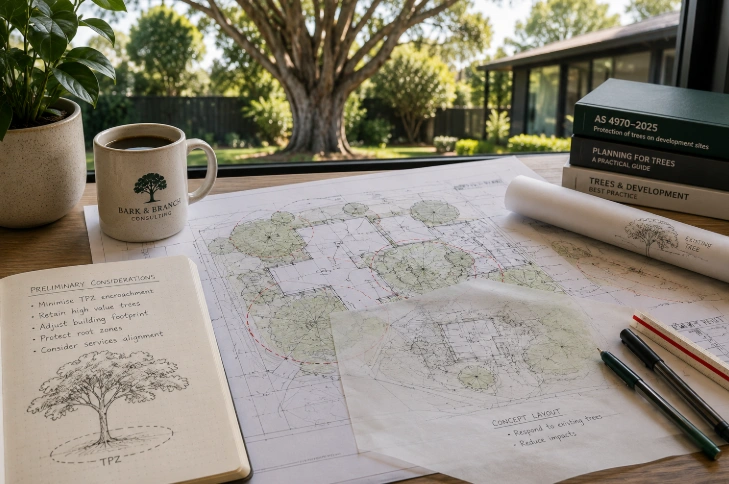
What is a Preliminary Arboricultural Report?
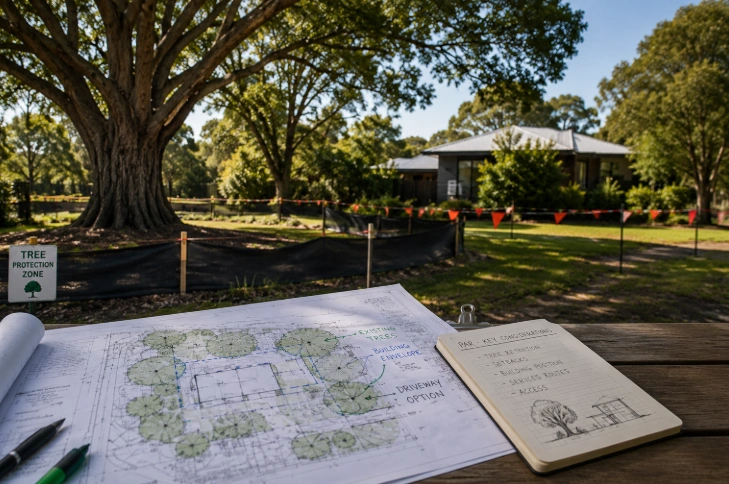
A Preliminary Arboricultural Report (PAR) provides early-stage arboricultural information to assist with planning and design before a development proposal is finalised.
The report identifies trees within and adjoining the site, assesses their condition and retention value, and establishes the key tree protection constraints that should be considered during the design process.
By identifying these constraints early, a PAR can help architects, designers and property owners position buildings, driveways, services and other works to minimise unnecessary impacts on trees.
Early arboricultural input can reduce the need for later design changes and provide a clearer pathway towards a development that appropriately balances project objectives with tree retention.
When Do You Need a PAR?
A Preliminary Arboricultural Report is most valuable during the early planning and concept design stages, before the location and footprint of proposed development have been finalised.
Common situations include:
• Early concept design for new dwellings, extensions or secondary dwellings
• Subdivision and larger development sites containing multiple trees
• Sites with significant, high-retention or Council-managed trees
• Development adjoining neighbouring trees that may constrain the design
• Identifying tree protection requirements before buildings, driveways and services are positioned
• Assisting architects, designers and planners to understand tree constraints before progressing detailed plans
• Where early arboricultural advice may help avoid unnecessary tree removal or later redesign
What Does a PAR Include
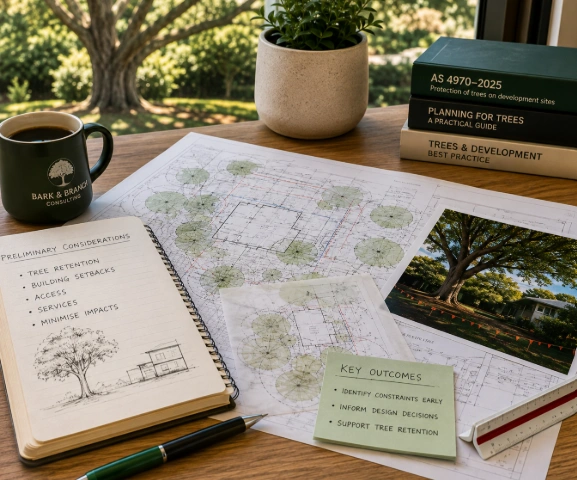
A Preliminary Arboricultural Report provides an early assessment of the trees on and adjoining a development site and identifies the key arboricultural constraints that should be considered during the design process.
A typical PAR may include:
• Tree identification and assessment of health, structure and retention value
• Measurement of relevant tree dimensions and protection zones
• Identification of tree protection requirements in accordance with AS 4970–2025
• Assessment of trees that may constrain the proposed development
• Identification of Council, neighbouring and other trees requiring consideration
• Preliminary advice regarding suitable building setbacks, access, driveways and services
• Recommendations for tree retention, removal or further investigation
• Tree location plans, photographs and supporting tree data
• Practical arboricultural advice to assist architects, designers and planners during concept development
The aim is to identify tree-related constraints early, allowing the design to respond appropriately before detailed plans are finalised.
Tree Risk Assessments
Independent assessment of tree risk to support informed and proportionate tree management decisions. Bark & Branch Consulting undertakes tree risk assessments using recognised methodologies including QTRA and VALID for residential properties, commercial sites, schools, public spaces and other managed landscapes.
What is a Tree Risk Assessment?
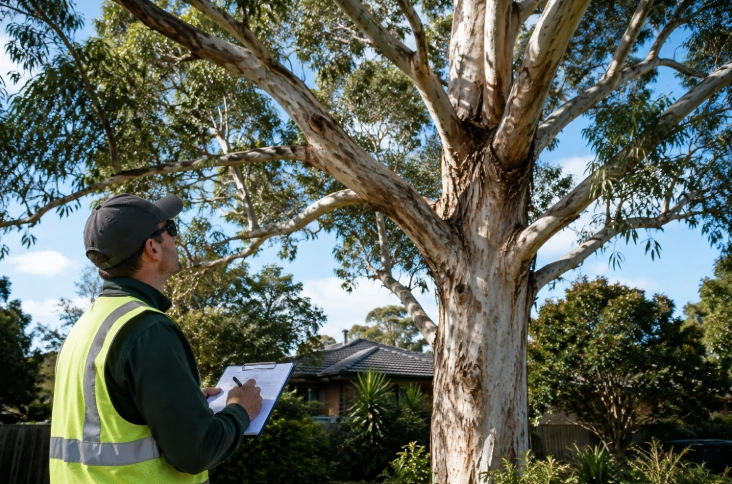
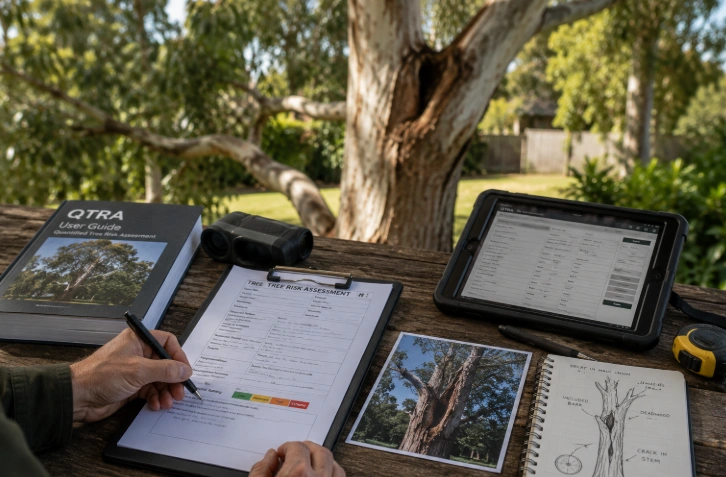
A Tree Risk Assessment is a systematic assessment of a tree to identify relevant defects, evaluate the likelihood and potential consequences of tree or branch failure, and assist with determining an appropriate management response.
The assessment considers the tree's condition, surrounding environment and the people, property or infrastructure that may be exposed should a failure occur.
Bark & Branch Consulting uses recognised tree risk assessment methodologies including Quantified Tree Risk Assessment (QTRA) and VALID, where appropriate to the scope of the assessment.
The objective is not simply to identify defects or recommend tree removal, but to provide a balanced and proportionate assessment that supports appropriate management while recognising the benefits provided by trees.
When Do You Need a Tree Risk Assessment?
A Tree Risk Assessment may be appropriate where there are concerns about the safety, condition or management of a tree, particularly where people, buildings or other property could be affected by tree or branch failure.
Common situations include:
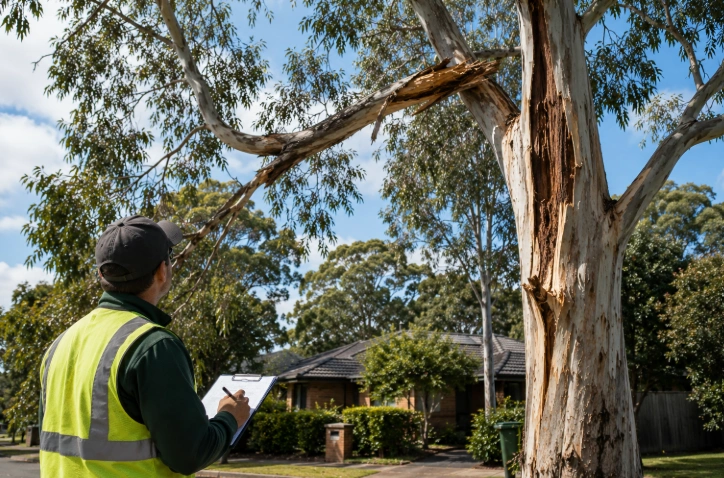
• Visible defects such as cavities, decay, cracks, wounds or damaged branch unions
• Dead, broken or hanging branches within the crown
• Changes in tree condition, canopy health or structural appearance
• Trees located close to dwellings, buildings, roads, play areas or other frequently occupied areas
• Trees that have been damaged by storms, construction activity or other disturbance
• Assessment of mature trees as part of ongoing property or asset management
• Where an independent arboricultural assessment has been requested by a property owner, school, business, strata manager or other organisation
A professional risk assessment helps determine whether management is required and, where appropriate, identifies proportionate measures to reduce risk while avoiding unnecessary tree removal.
What Does a Tree Risk Assessment Include?
A Tree Risk Assessment provides a structured evaluation of the tree, relevant defects, potential targets and the consequences associated with tree or branch failure.
A typical assessment may include:
• Assessment of tree health, structure and condition
• Identification of defects, decay, wounds, cavities or deadwood
• Assessment of the likelihood and consequences of tree or branch failure
• Identification of people, property or infrastructure that may be exposed
• Risk evaluation using QTRA or VALID, where appropriate
• Recommendations for pruning, monitoring, further investigation or other risk mitigation
• Supporting photographs and clear management recommendations
The objective is to provide practical, proportionate advice that supports informed tree management decisions.
Tree Damage Assessment
Independent arboricultural assessment of suspected tree-related damage to buildings, pavements, driveways, retaining walls, fences and other infrastructure. Bark & Branch Consulting provides evidence-based advice to investigate the relationship between trees and observed damage and assist with appropriate management decisions.
What is a Tree Damage Assessment?
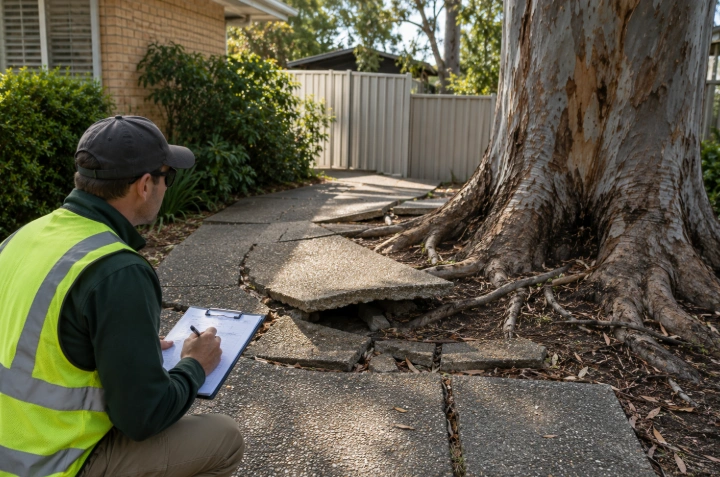
A Tree Damage Assessment investigates whether a tree may be contributing to damage or displacement of nearby structures or infrastructure.
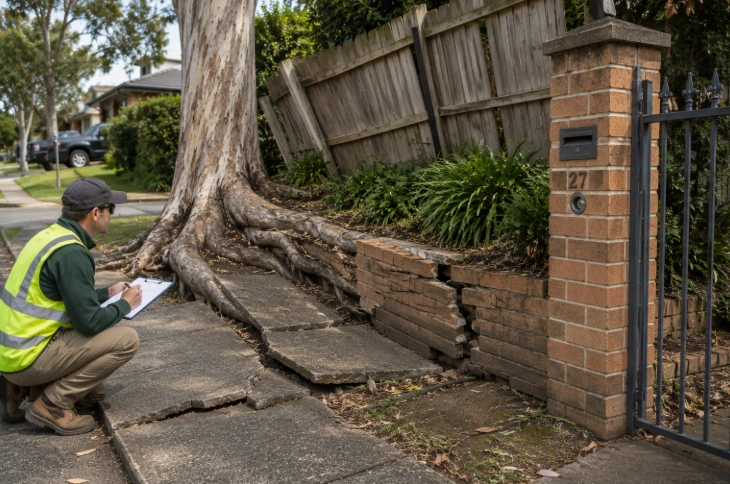
Common concerns include lifted or cracked paving, damaged driveways, displaced retaining walls and fences, or suspected interaction between tree roots and built structures.
The assessment considers the location and condition of the tree, surrounding infrastructure, visible patterns of damage and the likely relationship between tree growth and the observed issue.
The objective is to provide an independent arboricultural opinion on whether the tree is likely to be contributing to the damage and identify practical management options where appropriate.
When Do You Need a Tree Damage Assessment?
A Tree Damage Assessment may be appropriate where damage to property or infrastructure is suspected to be associated with a nearby tree.
Common situations include:
• Lifted or uneven paving and pathways
• Cracking or displacement of driveways and hard surfaces
• Movement of retaining walls or boundary fences
• Tree roots interacting with structures or services
• Damage involving Council or neighbouring trees
• Disputes regarding the likely cause of property damage
An assessment can help establish whether there is a credible arboricultural relationship between the tree and the observed damage before management decisions are made.
What Does a Tree Damage Assessment Include?
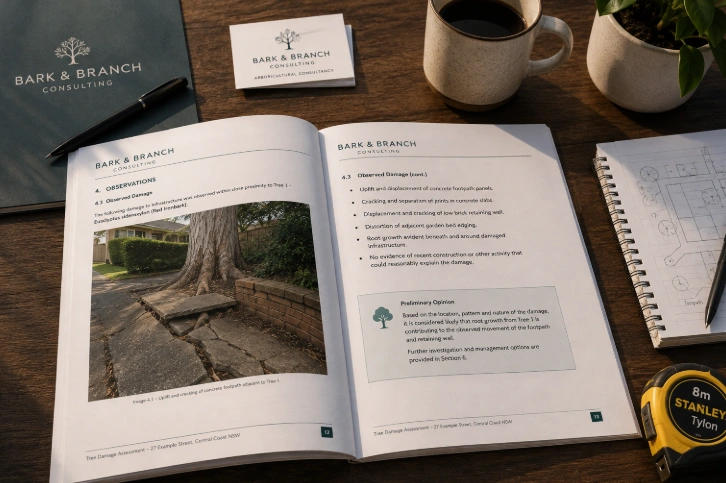
A Tree Damage Assessment typically considers:
• Tree species, size, condition and location
• Location and nature of the observed damage
• Visible root growth and surrounding site conditions
• The likely relationship between the tree and damaged infrastructure
• Relevant distances and site constraints
• Photographic documentation of observed conditions
• Practical management or further investigation recommendations
Where the cause cannot be established through visual assessment alone, further investigation such as root investigation or specialist engineering advice may be recommended.
Arboricultural Supervision
On-site arboricultural supervision during construction where works are undertaken near retained trees. Practical guidance helps protect trees while allowing construction activities to proceed in accordance with approved plans and arboricultural recommendations.
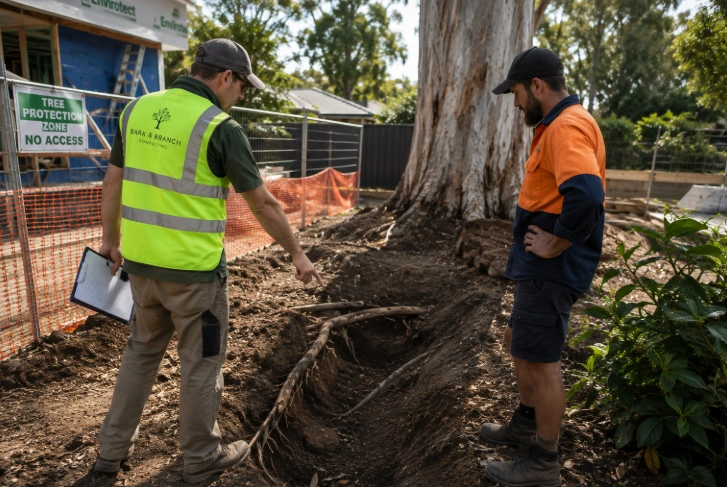
What is Arboricultural Supervision?
Arboricultural supervision involves a consulting arborist attending site during specific construction activities that may affect retained trees.
This commonly includes excavation within tree protection areas, installation of services, demolition near trees, root-sensitive works and other activities identified in an approved arboricultural report.
The aim is to provide practical on-site guidance, identify significant roots or tree-related constraints as work progresses, and help the project remain consistent with the approved tree protection requirements.
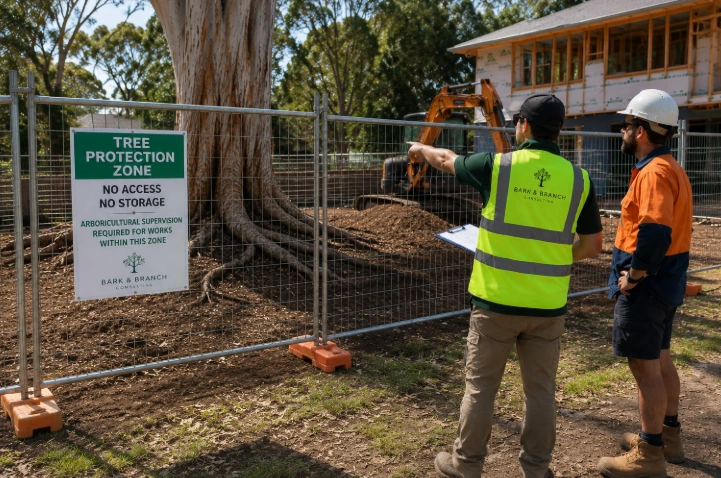
When Do You Need Arboricultural Supervision?
Supervision may be required where:
Excavation is undertaken within or near a Tree Protection Zone
Footings, driveways or retaining walls are constructed near retained trees
Underground services pass through tree protection areas
Demolition or site works occur close to trees
Significant roots may be encountered during excavation
Council conditions or an arboricultural report require works to be supervised
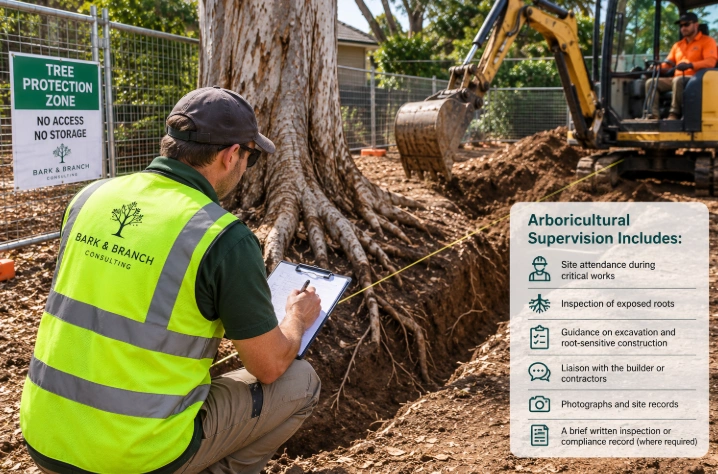
What Does Arboricultural Supervision Include?
Depending on the project, supervision may include site attendance during critical works, inspection of exposed roots, guidance on excavation and root-sensitive construction, liaison with the builder or contractors, photographs and site records, and a brief written inspection or compliance record where required.
Pruning Specifications & Tree Management Advice
Clear, professional arboricultural advice to guide appropriate tree pruning and ongoing management. Bark & Branch Consulting prepares practical pruning specifications and management recommendations to support tree health, structural integrity, development requirements and safe, appropriate tree management.
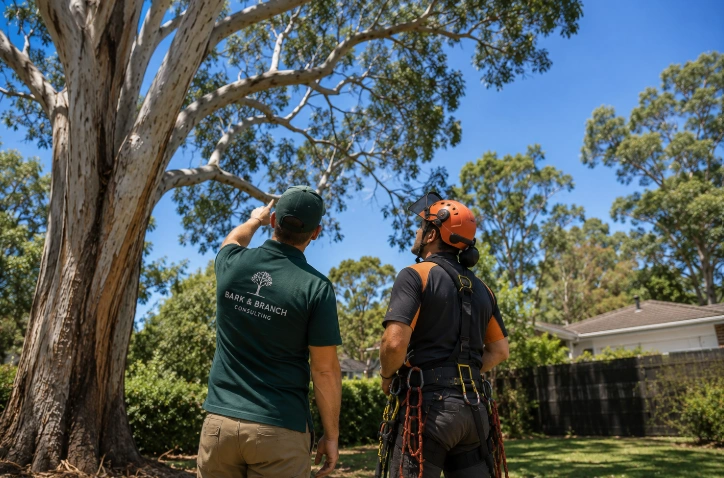
What is a Pruning Specification & Tree Management Advice?
A pruning specification provides clear, professional instructions for tree pruning and management based on the condition, structure and surrounding environment of the tree.
Bark & Branch Consulting can assess trees and provide recommendations identifying the appropriate pruning objectives, extent of works and management requirements.
Where pruning is recommended, specifications are prepared with consideration of AS 4373–2007 – Pruning of Amenity Trees, helping ensure works are appropriate, clearly communicated and can be provided to a suitably qualified arborist for implementation.
Tree management advice may also address matters such as deadwood, defective branches, canopy conflicts, clearance requirements and ongoing tree management.
When Do You Need a Pruning Specification or Tree Management Advice?
Professional advice may be useful where the required tree works are unclear or where pruning needs to be properly specified before engaging a contractor.
Common situations include:
Pruning required as part of a Development Application or Council approval
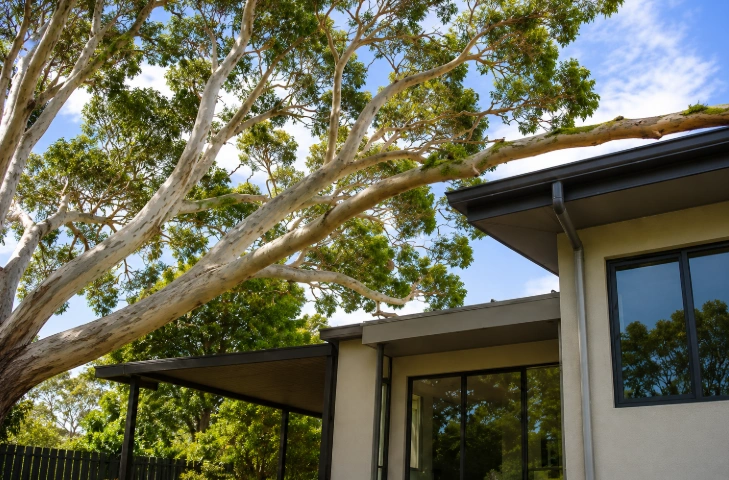
Branches conflicting with buildings, roofs or other infrastructure
Dead, damaged or defective branches requiring management
Clearance pruning around proposed construction
Pruning of Council or neighbouring trees associated with development
Providing contractors with a clearly defined scope of tree works
Establishing appropriate ongoing management for important or retained trees
What Does a Pruning Specification Include?
Depending on the site and purpose, a pruning specification may include:
Inspection and assessment of the tree
Identification of branches or canopy areas requiring management
Clear pruning objectives and extent of works
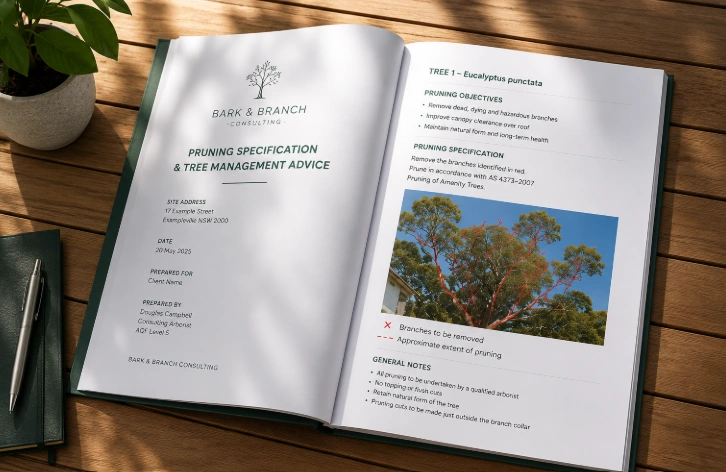
Photographs or annotated images identifying required works
Recommendations consistent with AS 4373–2007
Consideration of tree health, structure and future growth
A written specification suitable for Council, builders or tree contractors
Additional tree management recommendations where required

Privacy Policy
Bark & Branch Consulting respects your privacy and is committed to handling personal information responsibly.
We may collect personal information such as your name, contact details, property or project information, and other information you provide when contacting us, requesting a quotation or engaging our services.
This information is used to respond to enquiries, prepare quotations, provide arboricultural consulting services, communicate with clients and administer our business.
We do not sell or rent personal information. Information may only be disclosed to third parties where reasonably necessary to provide our services, with your consent, or where required by law.
We take reasonable steps to protect personal information from misuse, loss, unauthorised access, modification or disclosure.
You may contact Bark & Branch Consulting if you have questions about how your personal information is handled or wish to request access to or correction of information we hold about you.
Contact: Bark & Branch Consulting
Email: douglas@barkandbranchconsulting.com.au